

The gap between a general sheet metal job shop and an OEM sheet metal fabrication supplier is not measured in machine capability — many job shops have the same laser cutters, press brakes, and welding equipment as OEM-grade manufacturers. The gap is measured in quality system infrastructure, documentation discipline, and the ability to produce consistent, traceable components across repeated production lots. For OEM procurement managers sourcing fabricated sheet metal parts for industrial equipment, selecting an OEM sheet metal fabrication partner is a decision with long-term consequences for product quality, regulatory compliance, and supply chain reliability. This article explains what OEM-level sheet metal fabrication actually requires and how to evaluate whether a supplier can deliver it.
What Makes OEM Sheet Metal Fabrication Different
General fabrication produces parts. OEM sheet metal fabrication produces parts with documentation. The distinction sounds simple, but it changes every aspect of the manufacturing process. An OEM sheet metal fabrication supplier maintains a quality management system — typically certified to ISO 9001 as a minimum — that governs every production step from material receiving inspection through final packaging. Each production lot is traceable to the specific material heat number, the machine and operator that produced it, the inspection data measured during production, and the release authorization that cleared the parts for shipment.
This documentation infrastructure is not optional for OEM sheet metal fabrication — it is the mechanism by which the OEM's quality system extends into the supplier's manufacturing process. When a field failure occurs on an OEM product, the OEM sheet metal fabrication supplier's lot records enable root cause investigation that traces the defective component back to the specific material lot, production date, and process parameters that produced it. Without this traceability, the OEM cannot isolate the failure cause, cannot implement targeted corrective action, and cannot prevent recurrence — all of which are requirements of the OEM's own quality system and regulatory obligations.
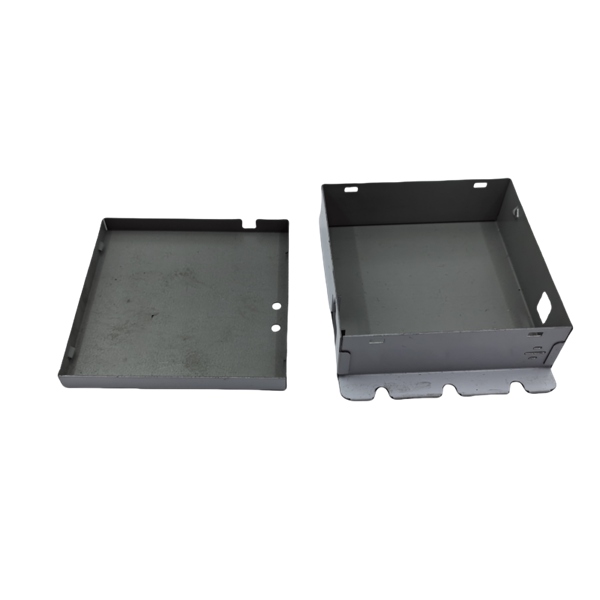
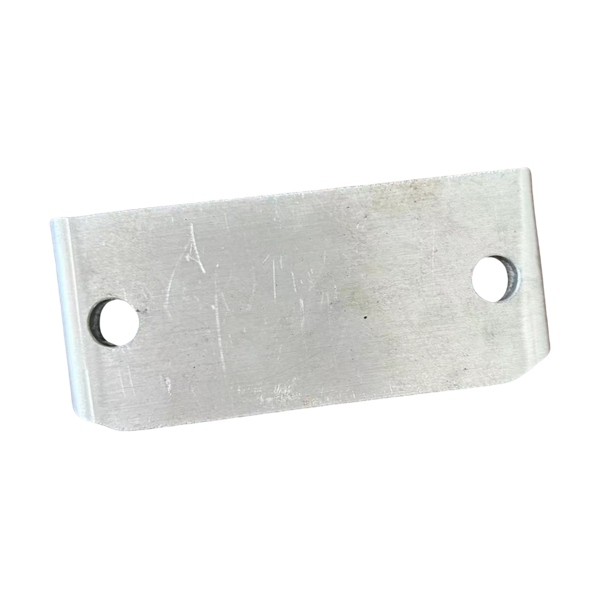
OEM Versus Job Shop: The Practical Differences
In practical terms, OEM sheet metal fabrication differs from job shop work in several measurable ways. An OEM sheet metal fabrication supplier provides first article inspection per AS9102 or customer-specified format, maintains statistical process control on critical dimensions with documented Cpk values, uses approved supplier lists for raw material sourcing, manages non-conformance through documented corrective and preventive action (CAPA) procedures, and undergoes periodic quality system audits by the OEM's quality team. A job shop may produce dimensionally equivalent parts but cannot provide this documentation infrastructure — which disqualifies them from OEM sheet metal fabrication work in regulated or quality-critical applications.
Production Capability for OEM Sheet Metal Fabrication
OEM sheet metal fabrication production capability is evaluated across three dimensions: equipment, capacity, and process control. The equipment baseline for OEM sheet metal fabrication includes fiber laser cutting (2 to 10 kW), CNC press brakes with 100+ ton capacity and CNC-controlled ram positioning, CNC turret punching for high-volume hole production, and certified welding capability (TIG, MIG, spot) with AWS-qualified welders and procedures. Each machine must be maintained on a preventive maintenance schedule with documented calibration of positioning accuracy, and the OEM sheet metal fabrication supplier should be able to provide maintenance records on request.
Capacity Planning in OEM Sheet Metal Fabrication
Capacity — the supplier's ability to produce the required quantity within the required lead time — is a function of machine availability, labor capacity, and material lead time. An OEM sheet metal fabrication supplier should be able to provide a capacity assessment that shows machine hours available per month, current utilization percentage, and the allocation of capacity to existing OEM programs. A supplier running at 95 percent utilization has no room for volume growth or expedited orders — and an OEM that commits production volume to a capacity-constrained OEM sheet metal fabrication supplier will eventually face late deliveries that cascade through their own assembly schedule.
Material Sourcing and Traceability in OEM Sheet Metal Fabrication
Material sourcing in OEM sheet metal fabrication goes beyond purchasing the correct grade of sheet or plate. OEM-level material management requires sourcing from approved suppliers — typically steel service centers or mill-authorized distributors — with material test reports (MTR) documenting chemical composition and mechanical properties for each heat. The OEM sheet metal fabrication supplier maintains a material lot control system that links each production lot of fabricated parts to the specific material heat number from which they were produced, enabling forward and backward traceability throughout the product lifecycle.
Material Specification Verification for OEM Sheet Metal Fabrication
For OEM sheet metal fabrication in regulated applications — medical devices, aerospace, automotive safety — material specification verification goes beyond the MTR. The OEM may require incoming material verification through independent laboratory testing — chemical analysis via optical emission spectroscopy (OES) to verify elemental composition, and mechanical testing to verify yield strength, tensile strength, and elongation — to confirm that the material test report accurately represents the material received. This independent verification protects the OEM from material certification fraud and from material mix-ups at the service center level, both of which are documented risks in the metals supply chain.
Quality Documentation for OEM Sheet Metal Fabrication
The documentation package from an OEM sheet metal fabrication supplier varies based on the OEM's quality requirements and the regulatory environment of the end product. At minimum, an OEM sheet metal fabrication documentation package includes:
First article inspection report with dimensional verification of every drawing characteristic
Material test reports with heat number traceability to the production lot
Certification of conformance stating that parts meet drawing requirements
Process capability data (Cpk) on critical dimensions from the production validation run
Welding procedure specifications and welder qualifications (for welded assemblies)
For OEM sheet metal fabrication serving aerospace, medical, or automotive OEMs, the documentation requirements extend further — production part approval process (PPAP) submissions per AIAG standards for automotive, device history records per FDA 21 CFR 820 for medical, or AS9102 first article inspection reports for aerospace. A qualified OEM sheet metal fabrication supplier understands these industry-specific requirements and has experience producing the documentation that regulatory submissions demand.
Supplier Qualification Process for OEM Sheet Metal Fabrication
Qualifying an OEM sheet metal fabrication supplier is a structured process that should be completed before the first production order is placed. The qualification process typically includes:
Quality system audit — verify ISO 9001 certification and review the supplier's quality manual, non-conformance procedure, and corrective action system
Capability assessment — review equipment list, machine maintenance records, and process capability data on operations comparable to the OEM's parts
Source inspection — visit the facility and verify that the equipment, tooling, and inspection equipment match the quoted capabilities
Pilot production run — produce a small quantity (5 to 50 pieces) under production conditions with full documentation, then verify dimensional compliance and documentation completeness
Performance review — after 3 to 6 months of production, review on-time delivery, quality acceptance rate, and corrective action responsiveness to confirm the supplier meets ongoing performance expectations
Red Flags in OEM Sheet Metal Fabrication Supplier Evaluation
Several indicators during supplier evaluation should prompt additional scrutiny before awarding OEM sheet metal fabrication business. A supplier that cannot produce Cpk data on critical dimensions from previous production runs may lack the process control infrastructure that OEM work requires. A supplier with no documented non-conformance history may not be tracking non-conformances — which means problems are occurring but not being captured and corrected. A supplier that quotes significantly below market pricing may be cutting corners on material sourcing, quality inspection, or documentation — and the cost of those shortcuts will eventually appear as field failures in the OEM's product.
Managing OEM Sheet Metal Fabrication Supply Chain Risk
Once an OEM sheet metal fabrication supplier is qualified and in production, ongoing supply chain risk management ensures sustained performance. Key risk factors include supplier capacity utilization (above 85 percent utilization increases delivery risk), material price volatility (particularly for stainless steel and aluminum), single-source dependency (no qualified backup supplier), and quality drift (gradual dimensional change as tooling wears without process control catching the drift). OEM procurement teams should monitor these risk factors through quarterly business reviews with the OEM sheet metal fabrication supplier, tracking delivery performance, quality acceptance rates, and capacity utilization trends.
Conclusion
OEM sheet metal fabrication is defined not by the parts it produces but by the quality system, documentation, and traceability infrastructure that surrounds the production process. OEM buyers who evaluate OEM sheet metal fabrication suppliers on quality system certification, process capability data, material traceability, and documentation completeness — rather than on unit price alone — establish sourcing relationships that support their own quality obligations, regulatory requirements, and customer commitments. A qualified OEM sheet metal fabrication partner with ISO 9001 certification, integrated production capability, and experience in the OEM's industry sector provides more than parts — they provide the process assurance that enables the OEM to build, ship, and stand behind its products. If you are evaluating OEM sheet metal fabrication suppliers for your next production program, start with a quality system audit, request process capability data from comparable work, and conduct a pilot production run before committing to volume — the investment in thorough qualification pays back in reduced quality risk and reliable delivery for the life of the program.
FAQ
What quality certification is required for OEM sheet metal fabrication?
ISO 9001:2015 is the minimum quality system certification for OEM sheet metal fabrication. Automotive applications require IATF 16949, aerospace requires AS9100D, and medical device manufacturing requires ISO 13485.
How is material traceability maintained in OEM sheet metal fabrication?
OEM sheet metal fabrication suppliers maintain lot control systems linking each production batch to the material heat number on the mill test report, enabling forward and backward traceability throughout the component lifecycle.
What is a first article inspection in OEM sheet metal fabrication?
First article inspection in OEM sheet metal fabrication documents dimensional verification of every drawing characteristic using calibrated measurement equipment, establishing the baseline for production acceptance and process capability verification.
How long does OEM sheet metal fabrication supplier qualification take?
Typical OEM sheet metal fabrication supplier qualification — from initial quality audit through pilot production run and documentation review — requires 4 to 12 weeks depending on part complexity and the OEM's quality requirements.
What is the difference between OEM sheet metal fabrication and prototype fabrication?
OEM sheet metal fabrication requires full quality system certification, material traceability, process capability data, and production documentation. Prototype fabrication produces parts without these quality system requirements, suitable for design validation but not for production release.
References
1. ISO 9001:2015, "Quality Management Systems—Requirements," International Organization for Standardization, Geneva, 2015.
2. IATF 16949:2016, "Quality Management System Requirements for Automotive Production," International Automotive Task Force, 2016.
3. AS9100D:2016, "Quality Management Systems—Requirements for Aviation, Space, and Defense Organizations," SAE International, Warrendale, 2016.
4. Automotive Industry Action Group (AIAG), "Production Part Approval Process (PPAP)," 4th Edition, AIAG, Southfield, 2006.
5. Montgomery, D.C., "Introduction to Statistical Quality Control," 7th Edition, Wiley, Hoboken, 2012.