

A metal electronics enclosure does one job: it creates a controlled environment for the electronics inside. Everything in metal electronics enclosure design — the material thickness, the seal geometry, the cooling approach, the grounding strategy, the hardware selection — serves that job. A metal electronics enclosure that gets any of these wrong fails in ways that are expensive to fix after the electronics inside have already been damaged or compromised. For design engineers and procurement managers specifying metal electronics enclosure for industrial applications, understanding the design decisions that determine enclosure performance — and knowing what to verify with suppliers — is the difference between equipment that operates reliably for years and equipment that fails prematurely under conditions the enclosure was supposed to handle. This article covers the metal electronics enclosure design best practices that matter in industrial environments.
Material Selection for Metal Electronics Enclosure
The material of a metal electronics enclosure determines its mechanical strength, corrosion resistance, electromagnetic properties, weight, and cost. The most common materials for industrial metal electronics enclosure applications are carbon steel (painted or powder coated), stainless steel (304 or 316L), and aluminum (extruded or sheet).
Carbon steel is the most economical metal electronics enclosure material for indoor and mild outdoor environments, with sheet thickness of 1.2 to 2.0 mm providing adequate mechanical strength for most electronic equipment enclosures. The steel substrate must be protected by a coating system — hot-dip galvanizing, electroplating, powder coating, or a combination — to prevent corrosion. For a metal electronics enclosure in outdoor or corrosive environments, a galvanized substrate with powder coating provides significantly better corrosion life than painted carbon steel alone.
Stainless steel 304 is the standard metal electronics enclosure material for food processing, pharmaceutical, marine, and high-humidity industrial environments where corrosion resistance is critical. Stainless steel 316L adds molybdenum for improved chloride resistance — essential for metal electronics enclosure applications in coastal marine, swimming pool, or chemical processing environments. The cost premium for stainless steel metal electronics enclosure material is typically 2 to 4 times the cost of painted carbon steel — justified when the corrosion environment demands it but unnecessary for standard indoor applications.
Aluminum is the preferred metal electronics enclosure material when weight is a constraint — aluminum is approximately one-third the weight of steel — or when the enclosure must serve as an EMI shield with superior thermal conductivity for heat dissipation. Extruded aluminum metal electronics enclosure profiles offer good strength-to-weight ratios and are available in standard sizes from multiple manufacturers, reducing cost and lead time compared to custom-fabricated aluminum enclosures. Cast aluminum metal electronics enclosure options offer superior corrosion resistance and are used in harsh outdoor and marine applications.
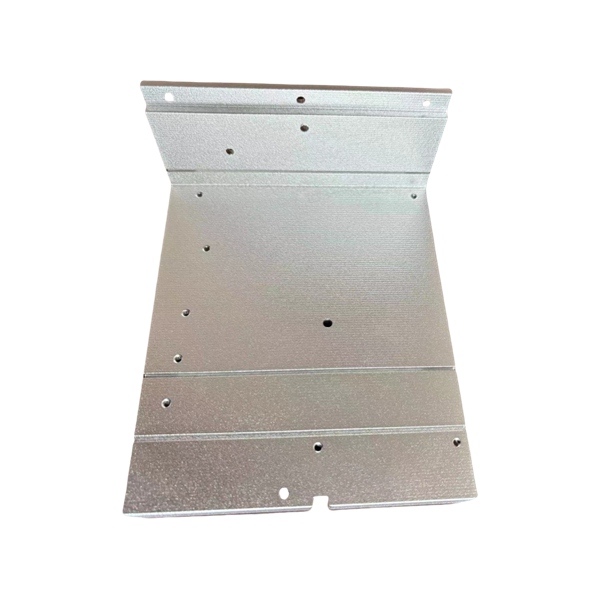

Material Properties and Trade-offs in Metal Electronics Enclosure Design
The choice of metal electronics enclosure material involves trade-offs beyond just corrosion resistance. Steel has superior magnetic shielding properties — making it the default choice for EMI-sensitive applications. Aluminum is non-magnetic, providing no magnetic field attenuation — a relevant concern for metal electronics enclosure applications near strong magnetic fields or where magnetic field containment is needed. Stainless steel has intermediate magnetic properties depending on the grade and manufacturing process. These magnetic characteristics should be part of the metal electronics enclosure material selection analysis when the enclosure houses sensitive electronics in high-EMI environments.
Thermal Management Design for Metal Electronics Enclosure
Thermal management is the most consequential metal electronics enclosure design challenge for electronics that generate significant heat. Every electronic component inside a metal electronics enclosure has a maximum allowable junction temperature — exceeding this temperature accelerates failure mechanisms and reduces component lifetime. The Arrhenius relationship describes the effect: for every 10°C increase in operating temperature, the failure rate of most electronic components approximately doubles. This is why metal electronics enclosure thermal management is not an optional design feature — it is a reliability requirement.
The metal electronics enclosure thermal design process follows a sequence: first, calculate the total heat load from all components at maximum operating conditions — including worst-case ambient temperature and any solar or process heat input from the external environment. Second, determine the maximum allowable internal temperature based on the most thermally sensitive component. Third, evaluate passive thermal management strategies — convection, radiation, and conduction — to determine whether they can dissipate the heat load. Fourth, if passive methods are insufficient, select an active cooling solution appropriate to the metal electronics enclosure application.
Active Cooling Solutions for Metal Electronics Enclosure
Active cooling solutions for metal electronics enclosure applications include filtered fan systems, thermoelectric (Peltier) coolers, air-to-air heat exchangers, and liquid cooling loops. Filtered fans are the most common and cost-effective metal electronics enclosure active cooling solution for environments with non-corrosive, non-explosive atmospheres — providing airflow that removes heat from the enclosure interior and expels it to the external environment. The fan size and airflow rate is selected based on the metal electronics enclosure thermal load and the required temperature differential between inside and outside.
Thermoelectric coolers provide sealed cooling for metal electronics enclosure applications where air exchange with the external environment must be prevented — critical for dusty environments, contaminated atmospheres, or enclosures rated IP65 or above. Thermoelectric coolers for metal electronics enclosure applications have limited cooling capacity (typically 50 to 300 watts depending on unit size) and their coefficient of performance decreases as the temperature differential increases — making them most effective for metal electronics enclosure applications with moderate heat loads and high external temperatures. For metal electronics enclosure applications with heat loads above 500 watts, air-to-air heat exchangers or liquid cooling loops provide more efficient cooling.
Environmental Sealing and IP Rating in Metal Electronics Enclosure Design
Environmental sealing in metal electronics enclosure design protects the internal electronics from solid objects (dust, tools, insects) and liquids (water, cleaning agents, process chemicals). The sealing system in a metal electronics enclosure consists of a gasket — a continuous elastomeric seal around the door perimeter — and hardware that compresses the gasket to a specified compression range. The gasket compression range is critical: under-compression produces a leak path; over-compression compresses the gasket beyond its elastic limit, causing permanent set and leak paths that develop over time as the gasket relaxes.
The metal electronics enclosure gasket material must be selected for compatibility with the environmental conditions: silicone gaskets for high-temperature applications (up to 200°C) and food-safe requirements; EPDM gaskets for outdoor applications with exposure to UV, ozone, and weather; neoprene gaskets for oil and petroleum resistance; and polyurethane gaskets for high-abrasion applications. Gasket selection for metal electronics enclosure applications in food, pharmaceutical, or clean room environments should also consider FDA or EU food contact compliance requirements where applicable.
IP Rating Verification for Metal Electronics Enclosure
The IP (Ingress Protection) rating specified for a metal electronics enclosure is only achieved when the sealing system is properly designed, correctly installed, and appropriately maintained. IP ratings for metal electronics enclosure applications are verified through standardized testing per IEC 60529: the dust ingress test (for IP5X and IP6X ratings) and the water ingress test (for IPX3 through IPX9K ratings). The test conditions define the spray angle, water volume, and pressure — a metal electronics enclosure rated IP65 must pass a 30 kPa jet of water at 12.5 liters per minute from all angles. These are demanding test conditions, and achieving them in practice requires careful metal electronics enclosure design — including adequate gasket groove depth, specified compression stops, and tested cable entry sealing.
EMI Shielding in Metal Electronics Enclosure Design
Electromagnetic interference (EMI) shielding is a critical metal electronics enclosure design requirement for electronics that emit or are susceptible to electromagnetic radiation. EMI in industrial environments comes from motor drives, switching power supplies, wireless transmitters, and nearby RF equipment — all of which can disrupt the operation of sensitive electronics inside an unprotected metal electronics enclosure. Metal enclosures provide inherent EMI shielding because the continuous conductive shell reflects and attenuates electromagnetic waves — but this shielding effectiveness depends on three factors: electrical continuity of the enclosure, conductivity of the material, and the frequency of the electromagnetic interference.
Electrical continuity in a metal electronics enclosure is maintained through proper grounding bonding at every joint, door, and penetration. Unpainted metal-to-metal contact at joints — achieved through grounding fingers, EMI gaskets, or bonded joint hardware — maintains the shielding effectiveness across the metal electronics enclosure surface. Paint or coating at joints is an insulator that interrupts electrical continuity and degrades EMI shielding performance. For metal electronics enclosure applications requiring high shielding effectiveness (above 60 dB attenuation), dedicated EMI gaskets — conductive elastomer strips, wire-mesh gaskets, or finger-stock contacts — are specified at all door and panel joints.
Penetration Management in Metal Electronics Enclosure EMI Design
Every penetration in a metal electronics enclosure — cable entries, ventilation holes, viewing windows, display cutouts — is a potential EMI leakage path. Cable penetrations in EMI-critical metal electronics enclosure applications require filtered cable entries (EMI feedthrough filters) that suppress conducted EMI on conductors passing through the shield. Ventilation holes in high-EMI metal electronics enclosure designs are covered with honeycomb ventilation panels — conductive metal honeycomb structures that maintain airflow while blocking electromagnetic radiation across a wide frequency range. Viewing windows use transparent conductive coatings (ITO — indium tin oxide) or conductive mesh embedded in the glass to maintain EMI shielding at the window location.
Structural Design and Hardware for Metal Electronics Enclosure
The structural design of a metal electronics enclosure must provide adequate mechanical protection (IK rating) while supporting the weight of internal components without deflection. The IK rating — from IK01 (0.15 joule impact) to IK10 (20 joules impact) — is defined in IEC 62262 and specifies the enclosure's resistance to mechanical impact. Standard industrial metal electronics enclosure IK ratings are IK07 (2 joules, adequate for wall-mounted indoor enclosures) and IK10 (20 joules, required for floor-standing enclosures in public or accessible areas).
Metal electronics enclosure mounting design should consider access for maintenance — whether the enclosure must be mounted with clearance for door swing, cable entry access, and component removal and replacement. Enclosures specified in confined spaces without adequate maintenance clearance become difficult and expensive to service over the metal electronics enclosure operating life. Hinge selection — concealed hinges for clean-surface metal electronics enclosure designs, external pin hinges for heavy doors requiring full removal, and living hinges for lighter metal electronics enclosure applications — affects both the aesthetics and the maintainability of the installation.
Conclusion
Metal electronics enclosure design best practices are grounded in the physics of heat transfer, electromagnetics, and materials science — and in the practical engineering trade-offs that determine whether an enclosure performs or fails in service. Getting metal electronics enclosure design right means selecting the material for the environmental conditions, designing thermal management based on a heat load calculation rather than guesswork, specifying the IP rating with gasket material compatibility for the actual environmental conditions, maintaining electrical continuity for EMI shielding at every joint and penetration, and designing the structure for the mechanical load and IK rating the installation requires. A well-designed metal electronics enclosure protects the electronics it houses for the full equipment service life. A poorly designed metal electronics enclosure creates a false sense of protection while the electronics inside are exposed to thermal, environmental, and electromagnetic conditions that compromise reliability. When specifying metal electronics enclosure for your next project, include the heat load calculation, IP rating justification, and EMI shielding requirements in the procurement specification — the investment in detailed design pays back in reduced field failures and lower total cost of ownership.
FAQ
What material is best for metal electronics enclosure in outdoor industrial environments?
For outdoor industrial metal electronics enclosure applications, hot-dip galvanized steel with powder coating provides the best balance of cost, corrosion resistance, and mechanical strength. For highly corrosive or marine environments, stainless steel 316L is the preferred metal electronics enclosure material.
How is thermal management designed for a metal electronics enclosure?
Metal electronics enclosure thermal management begins with a heat load calculation summing the dissipation of all internal components at maximum load and worst-case ambient temperature. Passive cooling (natural convection, radiation, conduction) is evaluated first; active cooling (filtered fans, thermoelectric coolers, heat exchangers) is added when passive methods are insufficient.
What gasket material is appropriate for a metal electronics enclosure in food processing?
Silicone gaskets are the standard choice for metal electronics enclosure applications in food processing environments, providing high-temperature resistance, FDA-compliant food-safe grades, and resistance to cleaning chemicals used in food processing wash-down procedures.
How does a metal electronics enclosure provide EMI shielding?
A metal electronics enclosure provides EMI shielding through the reflection and attenuation of electromagnetic waves by the continuous conductive shell. Shielding effectiveness depends on material conductivity, electrical continuity at all joints (maintained through grounding bonds or EMI gaskets), and proper management of penetrations with filtered entries or conductive honeycomb panels.
References
1. IEC 60529:1989+AMD1:1999+AMD2:2013 CSV, "Degrees of Protection Provided by Enclosures (IP Code)," International Electrotechnical Commission, Geneva, 2013.
2. IEC 62262:2002, "Degrees of Protection Provided by Enclosures for Electrical Equipment Against External Mechanical Impacts (IK Code)," International Electrotechnical Commission, Geneva, 2002.
3. IEEE Std 299-2006, "IEEE Standard Method for Measuring the Effectiveness of Electromagnetic Shielding Enclosures," Institute of Electrical and Electronics Engineers, Piscataway, 2006.
4. Kraus, J.D. and Caropilli, K.R., "Electromagnetics," 6th Edition, McGraw-Hill, New York, 2002.
5. Incropera, F.P. et al., "Fundamentals of Heat and Mass Transfer," 7th Edition, Wiley, Hoboken, 2011.