

Electrical control cabinets are the nerve centers of industrial facilities — housing motor drives, PLC controllers, power distribution components, and safety relays that keep production lines, water treatment systems, and HVAC equipment operating. A electrical control cabinets assembly that is poorly fabricated — wrong material thickness, inadequate busbar design, missing environmental sealing, or untested insulation — creates downtime risk, safety hazards, and compliance failures that cost far more to fix than the price premium for getting the fabrication right the first time. For procurement engineers and plant managers specifying or sourcing electrical control cabinets, understanding the fabrication standards that govern these assemblies is essential to evaluating whether a supplier's work will perform reliably under real plant conditions. This article explains the electrical control cabinets fabrication standards that matter in practice.
The Governing Standard: IEC 61439 for Electrical Control Cabinets
The primary fabrication standard for electrical control cabinets is IEC 61439 (EN 61439 in Europe, GB 7251.1 in China), which specifies the design verification tests and manufacturing requirements for low-voltage switchgear and control assemblies. IEC 61439 replaced the older IEC 60439 standard in 2007, and the distinction matters: electrical control cabinets fabricated to IEC 60439 may no longer be considered compliant under current installation standards in many jurisdictions. Any serious electrical control cabinets supplier should be able to demonstrate compliance with IEC 61439-1 (general rules) and the relevant product-specific standard for the assembly type.
IEC 61439 defines several categories of electrical control cabinets: Assemblies for Power Distribution (ACB, MCC), Motor Control Centers (MCC), and Distribution Boards (DB). Each category has specific design verification requirements that the electrical control cabinets fabricator must satisfy through a combination of type testing and design verification. Understanding which IEC 61439 assembly category applies to the electrical control cabinets being sourced — and confirming that the supplier has conducted the required verification — is a baseline quality check for any procurement specification.
Design Verification Requirements Under IEC 61439
IEC 61439 requires the electrical control cabinets fabricator to verify specific design characteristics through testing or calculation. The most critical verifications for electrical control cabinets include: strength of materials and design — the enclosure must withstand mechanical impact at the specified IK rating; heating performance — the assembly must not exceed rated temperature rise limits at the rated current under specified ambient conditions; short-circuit withstand — the busbar system must withstand the rated short-circuit current for the specified duration without deformation or failure; and dielectric properties — the insulation must withstand the rated impulse voltage without breakdown. A electrical control cabinets fabricator that cannot provide documentation of these verifications — type test reports or design calculations with equivalent proven validity — is not fabricating to full IEC 61439 standard.
Material and Construction Standards for Electrical Control Cabinets
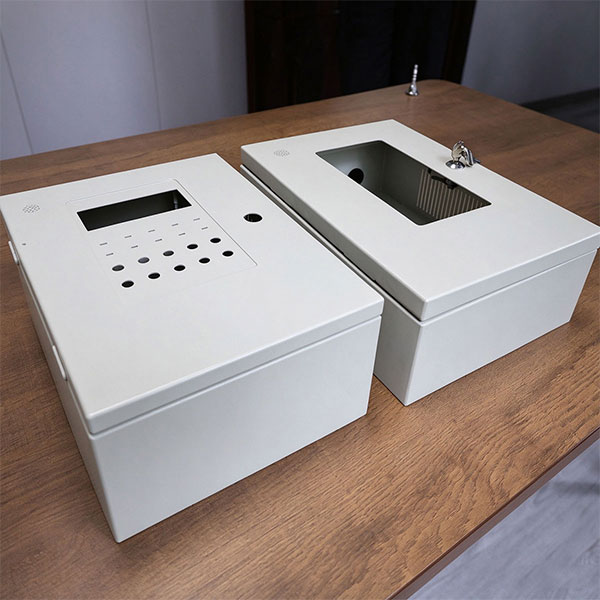
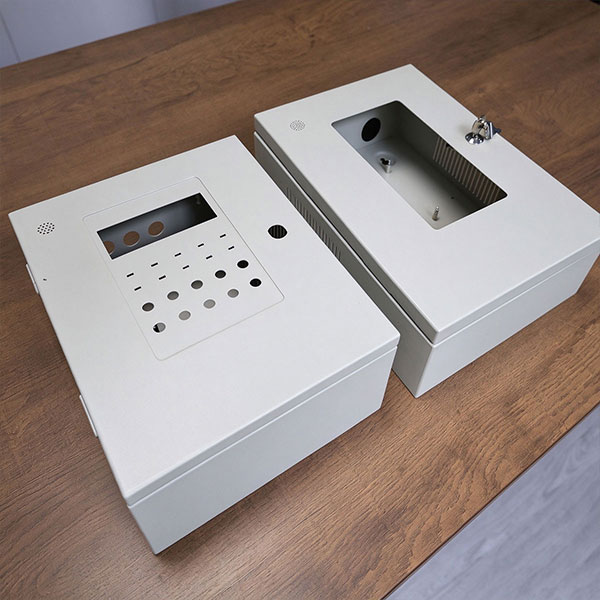
The enclosure material and construction of electrical control cabinets determines both the mechanical protection level (IK code) and the environmental protection level (IP code). Steel electrical control cabinets with sheet thickness of 1.5 mm to 2.0 mm provide adequate mechanical strength for most industrial applications, with IK10 rating achievable at 2.0 mm minimum. Stainless steel electrical control cabinets (304 or 316L) are specified for food processing, pharmaceutical, and marine environments where corrosion resistance is required. Fiberglass-reinforced polyester (GRP) electrical control cabinets are specified for extremely corrosive or high-temperature environments where metal enclosures are inadequate.
The electrical control cabinets fabrication standard for outdoor installations specifies UV-resistant materials, double-door designs to protect seal integrity, and heating elements for condensation management in cold climates. The fabrication should include ground continuity bonding at every panel joint — a electrical control cabinets requirement under IEC 61439 that is frequently neglected in low-quality assemblies. Verify that the supplier's electrical control cabinets fabrication process includes bonding across all conductive sections to ensure the enclosure forms a continuous ground plane.
IP Rating Specifications for Electrical Control Cabinets
The IP (Ingress Protection) rating in electrical control cabinets specifications describes the level of protection against solid objects and liquids. The first digit (0–6) indicates protection against solid objects; the second digit (0–9K) indicates protection against liquids. Standard electrical control cabinets IP ratings for industrial environments are:
IP54 — indoor industrial environments with occasional moisture, dust, and airborne particles. The standard minimum for most electrical control cabinets in factory environments.
IP55 — outdoor or wet industrial environments with direct spray wash-down. Common for electrical control cabinets in water treatment, food processing, and outdoor equipment.
IP65/66 — high-pressure wash-down, outdoor exposure, or environments with significant dust ingress. Electrical control cabinets at this level require gasket compression design verified to the specified pressure.
IP69K — high-pressure and steam jet cleaning. Specified for electrical control cabinets in food processing, pharmaceutical, and chemical cleaning-in-place environments.
The electrical control cabinets IP rating is only meaningful if the gasket design and door seal compression are fabricated correctly. A poorly installed or compressed gasket in a nominally IP65 electrical control cabinets assembly may provide IP43 protection in practice — with the failure appearing only after the equipment is installed and operating under real conditions.
Busbar and Component Mounting Standards
The internal fabrications of electrical control cabinets — busbar systems, component mounting, and wiring routing — are governed by detailed standards that determine both performance and safety. Busbars in electrical control cabinets must be sized for the rated current with adequate thermal margin, supported on insulated busbar supports that meet the required CTI (Comparative Tracking Index) rating, and arranged with adequate phase spacing to withstand the rated impulse voltage. Under IEC 61439, the electrical control cabinets busbar system must be verified to withstand the rated short-circuit current — verified by either type testing or calculation based on proven busbar short-circuit withstand data.
Component mounting in electrical control cabinets follows the principle of functional grouping: power components (contactors, drives, circuit breakers) are grouped separately from control components (PLC, relays, terminal blocks) to manage heat distribution and electromagnetic compatibility. The electrical control cabinets fabricator should maintain minimum clearances between components and from uninsulated live parts to the enclosure walls — specified in IEC 61439 and the component manufacturer's installation requirements — to prevent overheating and to maintain the dielectric strength of the assembly.
Wiring and Cable Termination Standards
Wiring within electrical control cabinets follows IEC 60204-1 (safety of machinery) and the relevant IEC standards for control circuit wiring. The key requirements include: conductor sizing for current-carrying capacity and voltage drop; wire identification with numbered sleeves or ferrules matching the wiring diagram; separation of power and control wiring to manage EMI; cable routing in metallic cable duct or trunking to maintain EMC performance; and termination torque specification for every terminal connection to prevent loosening under vibration. A professional electrical control cabinets fabricator provides a wiring diagram that is verified against the as-built assembly and included in the documentation package.
Testing and Verification Standards for Electrical Control Cabinets
The electrical control cabinets fabrication standard requires specific tests to be conducted on every assembly before shipment. These tests are defined in IEC 61439-1 and include:
Dielectric test — verification that the assembly withstands the rated test voltage applied between live parts and the enclosure for the specified duration without breakdown
Insulation resistance test — measurement of insulation resistance between circuits and to ground, with minimum values specified in the standard
Ground continuity test — verification that all accessible conductive parts are bonded to the ground terminal with resistance below the specified maximum
Busbar resistance measurement — verification of adequate cross-section and joint quality through resistance measurement
Functional test — verification that all control circuits, protection devices, and interlock functions operate as specified in the circuit diagram
A electrical control cabinets supplier that skips or shortens these tests — common when delivery schedules are tight — is shipping assemblies with unverified insulation and ground continuity. The test results should be documented in a test report included in the electrical control cabinets documentation package. Buyers sourcing electrical control cabinets should require these test reports as a condition of acceptance.
Arc Fault Testing for Electrical Control Cabinets
For electrical control cabinets in high-fault-current installations (typically above 10 kA), arc fault testing per IEC 61641 or UL 1558 may be specified. This test verifies that the electrical control cabinets enclosure contains the effects of an internal arc fault — burning through the door, ejecting hot gases, or igniting adjacent materials — for the rated test duration. Arc-rated electrical control cabinets are standard in utility substations, large motor control centers, and installations where fault current exceeds certain thresholds. Fabricating electrical control cabinets to arc-rated standards requires thicker enclosure materials, stronger door latching, and pressure-relief venting systems that direct arc gases away from personnel access points.
Documentation Requirements for Electrical Control Cabinets
Professional electrical control cabinets fabrication includes a documentation package that serves as the installation, operation, and maintenance reference for the equipment's operating life. The standard documentation package for electrical control cabinets includes: general arrangement drawings showing external dimensions, mounting details, cable entry locations, and weight; circuit diagrams and wiring diagrams with full component designations; a parts list with manufacturer part numbers and supplier codes; IEC 61439 verification documents (type test reports or design verification calculations); factory acceptance test reports documenting dielectric, insulation resistance, ground continuity, and functional test results; material certifications for the enclosure (steel grade, stainless steel grade, or GRP specification); and operating and maintenance instructions including spare parts recommendations.
Buyers sourcing electrical control cabinets should include documentation requirements in the procurement specification — specifying which documents are required, in what format, and when they must be delivered relative to the delivery of the equipment. A electrical control cabinets supplier that cannot produce complete documentation is a supplier that has not fabricated the equipment to the required standard.
Conclusion
Electrical control cabinets fabrication is a regulated manufacturing activity governed by IEC 61439 and related standards that specify material requirements, construction methods, busbar design, testing protocols, and documentation. Getting electrical control cabinets fabrication right means specifying the applicable IEC 61439 assembly category, verifying the supplier's design verification documentation, confirming IP and IK ratings appropriate to the installation environment, requiring documented factory acceptance tests on every assembly, and including documentation requirements in the procurement specification. A electrical control cabinets manufacturer with experience in IEC 61439-compliant fabrication, documented test procedures, and a complete documentation package provides assemblies that perform safely and reliably through the equipment's operational life. When sourcing electrical control cabinets, ask to see the IEC 61439 verification documents, request the factory acceptance test reports from a comparable completed assembly, and verify that the supplier's IP rating claims are supported by gasket specification and door seal compression data — the answers tell you whether the fabrication meets the standard or just looks like it does.
FAQ
What is the difference between IEC 60439 and IEC 61439 for electrical control cabinets?
IEC 61439 (replacing IEC 60439 since 2007) has stricter requirements for busbar short-circuit withstand verification, more rigorous temperature rise testing conditions, and updated definitions of assembly categories. Electrical control cabinets specified to the older IEC 60439 standard may not meet current installation compliance requirements in many jurisdictions.
What IP rating is appropriate for electrical control cabinets in a factory environment?
For indoor industrial environments, IP54 is the standard minimum electrical control cabinets IP rating. For wet or dusty environments, IP55 or IP65 is appropriate. IP69K is required for food processing and pharmaceutical wash-down applications.
What tests must be performed on electrical control cabinets before shipment?
Standard electrical control cabinets factory acceptance tests per IEC 61439-1 include dielectric test, insulation resistance test, ground continuity test, busbar resistance measurement, and functional test of all control circuits and protection functions.
How is busbar short-circuit withstand verified in electrical control cabinets?
Busbar short-circuit withstand in electrical control cabinets is verified either by type testing at an accredited laboratory or by calculation using proven short-circuit withstand data for the busbar material, cross-section, and support spacing — verified against the rated short-circuit current and duration.
References
1. IEC 61439-1:2020, "Low-Voltage Switchgear and Controlgear Assemblies — Part 1: Rules for Type-Tested and Partially Type-Tested Assemblies," International Electrotechnical Commission, Geneva, 2020.
2. IEC 60204-1:2016, "Safety of Machinery — Electrical Equipment of Machines — Part 1: General Requirements," International Electrotechnical Commission, Geneva, 2016.
3. IEC 61641:2014, "Enclosures for Low-Voltage Switchgear and Controlgear — Guide for Testing Under Conditions of Arcing Due to Internal Fault," International Electrotechnical Commission, Geneva, 2014.
4. EN 50310:2016, "Telecommunications Bonding Networks for Buildings and Other Structures," European Committee for Standardization, Brussels, 2016.
5. IEEE Std 3003.2-2014, "IEEE Recommended Practice for Equipment Grounding and Bonding in Industrial and Commercial Power Systems," Institute of Electrical and Electronics Engineers, Piscataway, 2014.