

Aluminum is the most machined non-ferrous metal in the world, and CNC aluminum machining is the process that turns it into functional components for industries that demand light weight without sacrificing structural integrity. From aerospace frames and automotive brackets to robotics arms and medical device housings, CNC aluminum machining delivers parts that are strong, corrosion-resistant, and significantly lighter than their steel counterparts. This article shares what we've learned running CNC aluminum machining production for equipment manufacturers over the years—the real benefits, the practical limitations, and the selection criteria engineers should use when specifying CNC aluminum machining for their designs.
Why Aluminum Works So Well for CNC Machining
Aluminum has a combination of properties that make it uniquely suited to CNC aluminum machining. Its thermal conductivity—roughly four times that of steel—carries cutting heat away from the tool-workpiece interface, reducing thermal distortion of the part and extending tool life compared to machining steel or stainless. The material's relatively low hardness means CNC aluminum machining can use higher spindle speeds and feed rates than other metals, removing material two to five times faster than steel on equivalent machine tools. A typical CNC aluminum machining operation on 6061-T6 aluminum runs at 8,000 to 12,000 RPM spindle speed with feed rates of 100 to 200 inches per minute—comparable to machining plastic—which translates into cycle times that are a fraction of what steel requires for the same geometry.
Chip Management in CNC Aluminum Machining
The one characteristic of aluminum that every CNC aluminum machining shop has to manage carefully is chip formation. Unlike the short, broken chips produced by steel machining, aluminum produces long, continuous chips that can wrap around the tool holder, pack into pockets in the part, or tangle in the chip conveyor system. Experienced CNC aluminum machining programming uses chip-breaking tool paths, high-pressure coolant directed at the cutting zone, and peck drilling cycles that prevent long stringers from forming. A CNC aluminum machining shop that doesn't have chip management dialed in will lose production time to chip clearance and risk scratching finished surfaces when chips recirculate through the cutting zone.
Weight Reduction Achievable with CNC Aluminum Machining
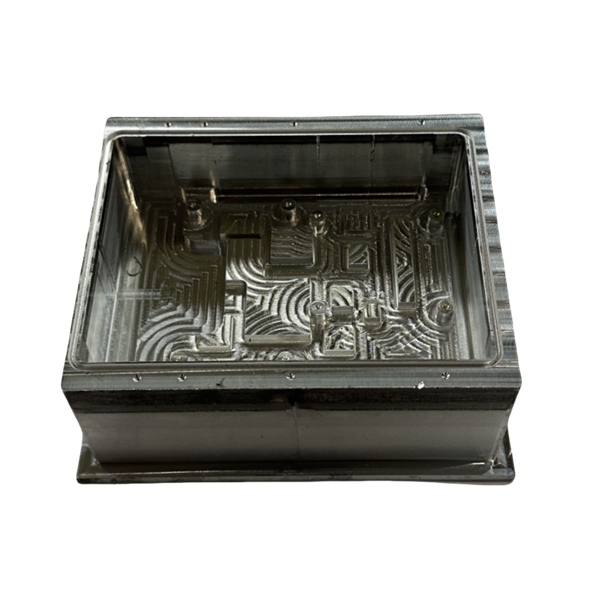
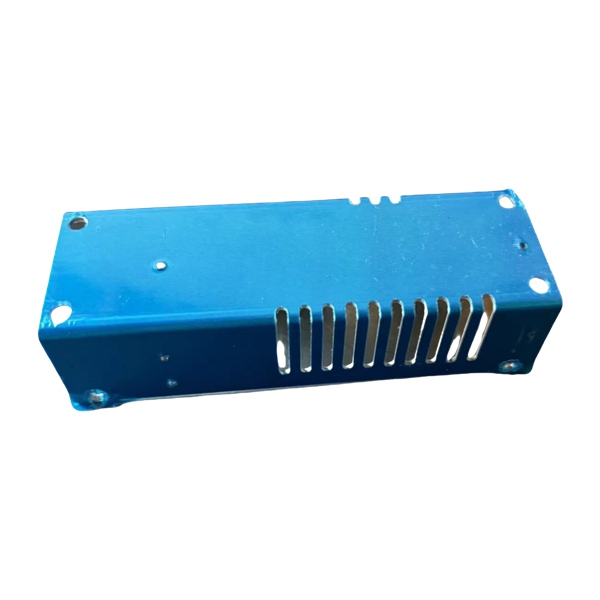
The headline benefit of CNC aluminum machining is weight reduction. Aluminum 6061-T6 has a density of 2.70 g/cm³ compared to 7.85 g/cm³ for mild steel—meaning a part machined from aluminum weighs 65 percent less than an equivalent-volume steel part. In practice, the weight savings for structural components using CNC aluminum machining are slightly less because aluminum's lower modulus of elasticity (68.9 GPa versus 200 GPa for steel) means that stiffness-critical features may need thicker cross-sections. But even accounting for stiffness compensation, CNC aluminum machining typically delivers net weight savings of 45 to 55 percent over steel equivalents for the same load capacity—a margin that drives adoption in every industry where every kilogram matters.
CNC Aluminum Machining for Aerospace and Automotive Applications
Aerospace manufacturers are among the heaviest users of CNC aluminum machining because airframe weight directly affects fuel consumption and payload capacity. Structural brackets, avionics chassis components, and interior fittings are routinely produced by CNC aluminum machining from 7075-T6 and 2024-T351 plate, achieving strength-to-weight ratios that make them competitive with composite materials at lower material cost. In automotive applications, CNC aluminum machining produces suspension components, engine brackets, and battery frame parts that reduce unsprung mass and improve vehicle dynamics. The automotive industry's shift toward electric vehicles is accelerating demand for CNC aluminum machining because EV manufacturers are desperate to offset battery weight with lighter structural components.
Surface Finish Capabilities in CNC Aluminum Machining
CNC aluminum machining achieves excellent as-machined surface finishes that often eliminate the need for secondary finishing. Standard CNC aluminum machining with carbide tooling at recommended feeds and speeds produces surface finishes of Ra 32 to Ra 63 µin (0.8 to 1.6 µm)—smooth enough for most functional surfaces. With high-speed machining passes using polished inserts, CNC aluminum machining can achieve Ra 8 to Ra 16 µin (0.2 to 0.4 µm), approaching the surface quality of ground finishes. This surface quality is possible because aluminum's low hardness allows a clean shear zone at the tool edge without built-up edge formation that degrades finish in steel machining.
Post-Machining Treatment Options for CNC Aluminum Machining Parts
Parts produced by CNC aluminum machining can receive a range of surface treatments that enhance appearance and corrosion resistance. Type II anodizing produces a 0.0003 to 0.001 inch oxide layer that accepts dye coloring, giving CNC aluminum machining parts a wear-resistant, corrosion-protective surface available in black, clear, or custom colors. Type III hard anodizing (hardcoat) produces a 0.001 to 0.003 inch layer with surface hardness approaching 60 HRC, suitable for CNC aluminum machining parts in wear-critical applications. Chromate conversion coating provides electrical conductivity for CNC aluminum machining components in electronic assemblies where anodizing's insulating properties would be problematic.
Cost Efficiency of CNC Aluminum Machining
The cost of CNC aluminum machining is driven by two main factors: raw material cost and cycle time. Aluminum stock costs roughly two to three times more per pound than carbon steel, but because CNC aluminum machining removes material so much faster, the per-part cost is often comparable or lower than steel equivalents when all factors are considered. A bracket that takes 15 minutes to machine in steel might take 5 minutes in aluminum on the same CNC aluminum machining center—the cycle time advantage offsets the higher material cost. For high-volume CNC aluminum machining production, the cycle time savings translate directly into higher throughput per machine hour, which is why many CNC aluminum machining shops allocate machine capacity specifically for aluminum work.
Selecting a CNC Aluminum Machining Supplier or Manufacturer
When choosing a CNC aluminum machining supplier, look for documented experience with the specific aluminum alloy and heat treatment your design requires. A CNC aluminum machining manufacturer who primarily works with 6061 may not have the machining parameters dialed in for 7075 or 2024, which require different tool geometries and feed strategies. Ask potential CNC aluminum machining suppliers for case studies of similar parts they've produced, their typical tolerance capability on aluminum, and their quality system certification. The best CNC aluminum machining suppliers will share process capability data and first article inspection reports without hesitation, because they know their capability supports the numbers they quote.
Conclusion
CNC aluminum machining delivers measurable benefits for lightweight structural applications—45 to 55 percent weight reduction compared to steel, cycle times two to five times faster, excellent as-machined surface finishes, and a wide range of post-machining surface treatment options. The key to getting the most out of CNC aluminum machining is matching the alloy grade to the application requirements and working with a CNC aluminum machining manufacturer who understands the unique characteristics of chip management, tool path optimization, and surface finish control that aluminum demands. For design engineers and procurement professionals looking to reduce component weight without the complexity or cost of composite alternatives, CNC aluminum machining remains the most practical and cost-effective path to production-ready lightweight metal parts.
Frequently Asked Questions
What aluminum grade is most common for CNC aluminum machining?
6061-T6 accounts for roughly 60 percent of CNC aluminum machining work due to its excellent combination of machinability, strength, corrosion resistance, and availability. 7075-T6 is chosen for higher strength requirements.
Can CNC aluminum machining hold tight tolerances?
Yes. CNC aluminum machining on standard equipment holds ±0.001 to ±0.003 inches routinely. Precision CNC aluminum machining on temperature-controlled machines with in-process probing achieves ±0.0002 to ±0.0005 inches on critical features.
Is CNC aluminum machining cost-effective for low-volume production?
For prototype and low-volume runs of 1 to 500 pieces, CNC aluminum machining is typically the most economical manufacturing method because it requires no tooling investment—just programming setup and machine time.
What surface treatment is recommended for CNC aluminum machining parts in outdoor use?
Type II anodizing with sealing provides the best combination of corrosion protection and UV stability for CNC aluminum machining parts exposed to outdoor conditions, offering 300 to 700 hours of salt spray resistance per ASTM B117.
References
1. ASM Handbook Volume 2: "Properties and Selection: Nonferrous Alloys and Special-Purpose Materials," ASM International, Materials Park, 1990.
2. ASTM B209-2014, "Standard Specification for Aluminum and Aluminum-Alloy Sheet and Plate," ASTM International, West Conshohocken, 2014.
3. Kalpakjian, S. and Schmid, S.R., "Manufacturing Engineering and Technology," 7th Edition, Pearson, Upper Saddle River, 2017.
5. Trent, E.M. and Wright, P.K., "Metal Cutting," 4th Edition, Butterworth-Heinemann, Boston, 2000.