

Material selection is the single most consequential decision in industrial stamping parts production. It determines forming feasibility, achievable strength, corrosion resistance, weight, cost, and the end-use performance of every stamped component. Yet material selection is frequently treated as a commodity decision—selecting the lowest-cost grade that meets a minimum strength specification—rather than as an engineering optimization that balances multiple performance requirements against cost constraints. This industrial stamping parts material selection guide provides manufacturing engineers and procurement managers with a systematic framework for matching material grades to stamping application requirements.
Carbon Steel Industrial Stamping Parts: Grades and Formability
Carbon steel is the most widely used material family for industrial stamping parts across all industrial sectors. The AISI designation system classifies carbon steels by carbon content—low carbon (below 0.15 percent C), mild carbon (0.15 to 0.30 percent C), and medium carbon (0.30 to 0.60 percent C)—with each category offering distinct combinations of formability, strength, and cost that govern their suitability for different industrial stamping parts applications.
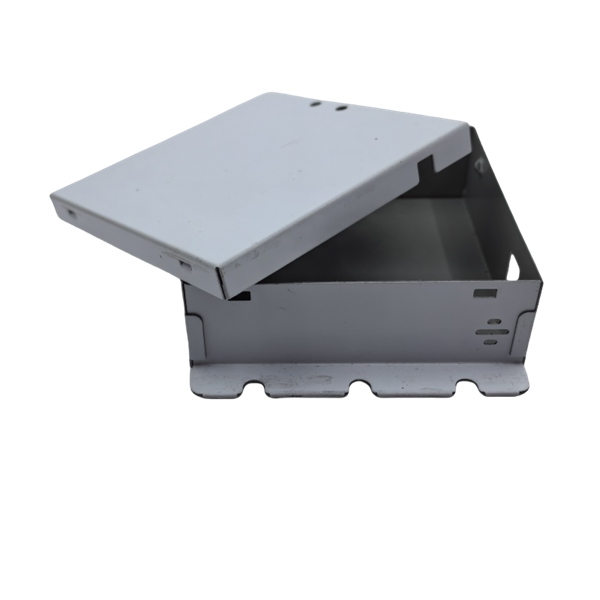
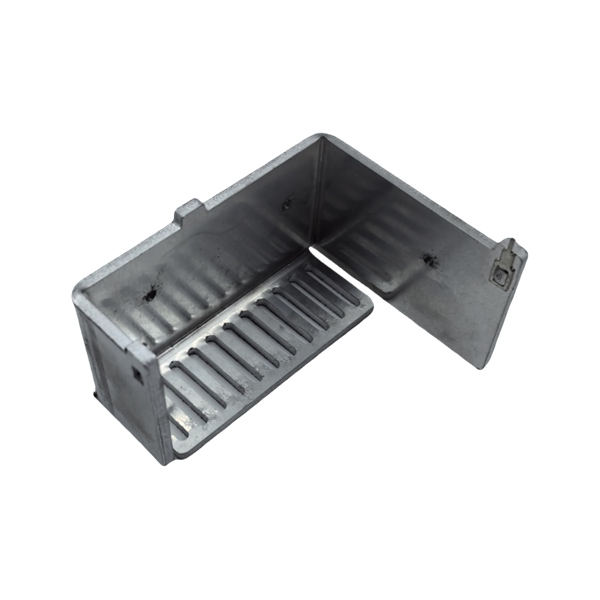
Low-Carbon and Draw-Quality Steel for Complex Industrial Stamping Parts
Low-carbon DQSK (draw quality skin pass) steel—AISI 1008 and 1010 grades—is the formability champion of the industrial stamping parts material family. DQSK industrial stamping parts achieve deep draw ratios of 2.0:1 and higher in single-action draws, making it the preferred material for complex progressive die stamping applications where maximum material deformation is required. The extremely low carbon content (less than 0.10 percent) of DQSK produces a microstructure of pure ferrite with minimal pearlite, delivering maximum ductility and the most uniform strain distribution across the stamped geometry. Structural industrial stamping parts made from 1008/1010 DQSK achieve yield strengths of 170 to 210 MPa after stamping strain hardening, adequate for most non-structural and semi-structural applications at a material cost significantly below HSLA alternatives.
Medium-Carbon Steel for High-Strength Industrial Stamping Parts
AISI 1045 and 1060 medium-carbon steels serve industrial stamping parts applications where as-stamped yield strength above 300 MPa is required without post-stamp heat treatment. The higher carbon content of medium-carbon industrial stamping parts materials provides superior fatigue resistance compared to low-carbon grades, making it the material of choice for high-cycle fatigue applications such as automotive seat components, suspension brackets, and industrial machinery wear plates. The tradeoff is formability: medium-carbon industrial stamping parts require approximately 40 percent more press tonnage than equivalent low-carbon geometries, and springback compensation in the die design must account for the significantly higher yield strength-to-modulus ratio of these materials.
High-Strength Low-Alloy (HSLA) Steel for Structural Industrial Stamping Parts
HSLA steels—ASTM A656, A715, and proprietary DP (dual-phase) grades—are the default material choice for structural industrial stamping parts in automotive, heavy equipment, and structural applications where yield strength above 345 MPa (50 ksi) is required in the stamped component. HSLA industrial stamping parts achieve their high strength through microalloying additions of niobium, vanadium, or titanium that form fine precipitates during the thermo-mechanical controlled processing of the sheet, producing a combination of high yield strength and good ductility that outperforms conventional carbon steel industrial stamping parts in every structural strength metric.
Advanced High-Strength Steel (AHSS) Grades for Industrial Stamping Parts
AHSS grades—dual-phase (DP), transformation-induced plasticity (TRIP), and martensitic steels—represent the leading edge of industrial stamping parts material development for automotive structural applications. DP600, DP780, and DP980 dual-phase industrial stamping parts achieve yield strengths of 340 to 780 MPa with total elongations of 20 to 30 percent—combinations of strength and ductility impossible to achieve in conventional HSLA or carbon steel grades. The forming behavior of AHSS industrial stamping parts differs significantly from conventional steels: AHSS materials exhibit higher strain hardening rates, higher blanking forces, and more pronounced springback, requiring progressive die designs with reinforced cam actions, higher-capacity presses, and springback compensation algorithms calibrated specifically for each AHSS grade and thickness combination.
Stainless Steel Industrial Stamping Parts
Stainless steel industrial stamping parts are specified when corrosion resistance is a primary design requirement. The four stainless steel families used in stamping applications—ferritic, austenitic, martensitic, and precipitation-hardening—each provide different combinations of corrosion resistance, strength, and formability that must be matched to the specific industrial stamping application environment.
Austenitic Stainless Steel for Corrosion-Resistant Industrial Stamping Parts
Type 304 and 316L austenitic stainless steels dominate industrial stamping parts applications requiring corrosion resistance in aggressive environments—chemical processing, food and pharmaceutical equipment, marine hardware, and architectural applications. Austenitic stainless steel industrial stamping parts achieve yield strengths of 200 to 250 MPa in the annealed condition, with strain-hardenable grades reaching 300 to 350 MPa after deep drawing deformation. The austenitic microstructure provides excellent formability and high ductility, but the high strength and significant work-hardening rate of austenitic stainless steel requires 30 to 50 percent higher blanking and drawing forces than equivalent carbon steel geometries. The galling tendency of austenitic stainless steel in stamping operations requires specialized lubricants—typically chlorinated or sulfurized extreme-pressure lubricants—to prevent tool steel adhesion and premature die wear.
Ferritic Stainless Steel for Automotive and Industrial Stamping Parts
Type 430 and 409 ferritic stainless steels are increasingly specified for industrial stamping parts in automotive applications, providing adequate corrosion resistance for under-hood and structural applications at significantly lower cost than austenitic grades. Ferritic stainless industrial stamping parts have lower yield strengths than austenitic grades (205 to 310 MPa), better deep drawability due to lower yield strength-to-elongation ratios, and immunity to chloride stress corrosion cracking—a failure mode that restricts austenitic stainless industrial stamping parts in marine and de-icing salt exposure environments. The magnetic properties of ferritic stainless steel also provide advantages in applications where magnetic sensing or electromagnetic compatibility is a design consideration.
Aluminum Alloys for Lightweight Industrial Stamping Parts
Aluminum alloy industrial stamping parts serve applications where weight reduction is the primary driver and the strength requirement can be satisfied at aluminum's lower yield strength levels. Aluminum alloys 3003, 3105, 5005, and 5182 are the dominant stamping alloys in industrial stamping parts applications, offering yield strengths ranging from 55 MPa (3003-O) to 200 MPa (5005-H34) across the available tempers.
Aluminum Temper and Strength Matching for Industrial Stamping Parts
Aluminum temper designation directly determines the as-stamped strength of aluminum industrial stamping parts. The O-temper (annealed) provides maximum formability for deep drawing and complex progressive die stamping, producing stamped parts at the annealed yield strength level. After stamping, aluminum industrial stamping parts can be artificially aged (T4 or T6 temper) to achieve significantly higher yield strengths—up to 260 MPa for 6061-T6—through precipitation hardening heat treatment. This post-stamp heat treatment capability is unique to aluminum industrial stamping parts and enables the designer to specify maximum formability during stamping, then achieve final strength levels in the aged condition that approach HSLA carbon steel strength levels without the stamping force penalties of high-strength materials.
Specialty Alloys for Demanding Industrial Stamping Parts Applications
Beyond the standard carbon steel, stainless steel, and aluminum material families, several specialty alloys serve industrial stamping parts applications with extreme performance requirements in temperature, corrosion, or wear resistance that standard materials cannot satisfy.
Tool Steel and Wear-Resistant Alloys for Industrial Stamping Parts
Tool steel stamping grades—D2, A2, and S7 cold-work tool steels—serve industrial stamping parts applications requiring wear resistance at elevated temperature or hardness above 50 HRC in the stamped component. These applications include stamping dies, cutting tools, wear strips, and machine component industrial stamping parts where the stamped part itself must maintain hardness and dimensional stability at temperatures up to 1,000°F. The stamping forces required for tool steel industrial stamping parts are approximately three to four times higher than equivalent carbon steel geometries, requiring presses with significantly higher tonnage ratings and progressive die designs with reinforced die shoes and bolster plates.
Conclusion
Material selection for industrial stamping parts is a multi-variable optimization problem that balances forming feasibility, as-stamped and post-processed strength, corrosion resistance, weight, and cost into a coherent specification. No single material grade is optimal for all industrial stamping parts applications—DQSK carbon steel is ideal for deep-drawn parts requiring maximum formability, HSLA and AHSS steels are essential for structural applications demanding maximum strength, stainless steel grades provide the corrosion resistance required for aggressive environments, and aluminum alloys enable weight reduction where strength requirements are moderate. Procurement engineers who engage material selection as an engineering optimization—using this industrial stamping parts material selection guide to match grade properties to application requirements—consistently achieve better performance and lower total cost than those who select materials on price alone.
Frequently Asked Questions
What is the difference between HSLA and AHSS for industrial stamping parts?
HSLA (high-strength low-alloy) steels achieve strength through microalloying and controlled rolling, providing good ductility at 345-550 MPa yield strength. AHSS (advanced high-strength steel) grades—dual-phase, TRIP, martensitic—achieve 340-1,500 MPa yield strength through advanced microstructure engineering, but require specialized forming parameters due to higher forces and springback.
Which stainless steel grade is best for corrosion-resistant industrial stamping parts?
Type 316L austenitic stainless steel provides the best general-purpose corrosion resistance for industrial stamping parts in chloride and acidic environments. Type 430 ferritic stainless steel is more cost-effective for mild corrosion environments and offers immunity to chloride stress corrosion cracking.
Can aluminum industrial stamping parts be heat treated after stamping?
Yes. 6061 aluminum alloy industrial stamping parts stamped in the O-temper can be solution heat-treated and aged to T6 temper (yield strength 260 MPa) after stamping, achieving significantly higher strength than achievable in any as-stamped aluminum temper.
What is the most cost-effective material for high-volume industrial stamping parts?
For non-structural industrial stamping parts below 0.125 inches thick, DQSK 1008/1010 low-carbon steel provides the best combination of formability, strength, and material cost. For structural applications, HSLA grades such as ASTM A656 Grade 60 provide superior strength-to-cost ratio.
References
1. ASTM A568/A568M-21, "Standard Specification for Steel, Sheet, Carbon, Structural, and High-Strength, Low-Alloy, Hot-Rolled and Cold-Rolled," ASTM International, West Conshohocken, 2021.
2. ASM Handbook Volume 14B: "Sheet Metal Forming," ASM International, Materials Park, 2005.
3. SAE J2745-2012, "Formable HSLA Steel Grade Minimum Property Standard," SAE International, Warrendale, 2012.
4. ASTM A240/A240M-22, "Standard Specification for Chromium and Chromium-Nickel Stainless Steel Plate, Sheet, and Strip," ASTM International, West Conshohocken, 2022.
5. Hosford, W.F. and Caddell, R.M., "Metal Forming: Mechanics and Metallurgy," 4th Edition, Cambridge University Press, Cambridge, 2011.