

Heavy equipment manufacturing places some of the most demanding requirements on industrial stamping parts of any industrial sector. The structural components, hardware attachments, and protective panels that constitute excavators, loaders, cranes, and mining equipment must deliver reliable mechanical performance under shock loads, vibration, extreme temperature ranges, and sustained fatigue stress—all while meeting the cost targets that make heavy equipment commercially viable. This article examines industrial stamping parts from a manufacturing engineering and procurement perspective, providing heavy equipment buyers with the technical criteria to specify, source, and qualify industrial stamping parts for demanding applications.
Material Selection for Industrial Stamping Parts in Heavy Equipment
Material selection for industrial stamping parts in heavy equipment is driven by the structural load, fatigue life requirement, weight constraint, and corrosion environment of the specific application. Unlike precision stamping parts for electronics or medical devices, industrial stamping parts for heavy equipment prioritize strength-to-weight ratio and fatigue performance over surface finish or dimensional precision. The most commonly specified materials for industrial stamping parts in heavy equipment manufacturing span carbon steels, high-strength low-alloy (HSLA) steels, and wear-resistant alloy plates.
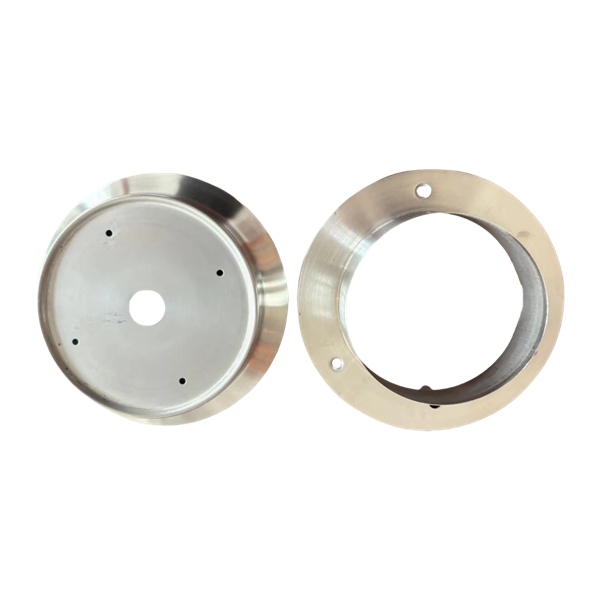
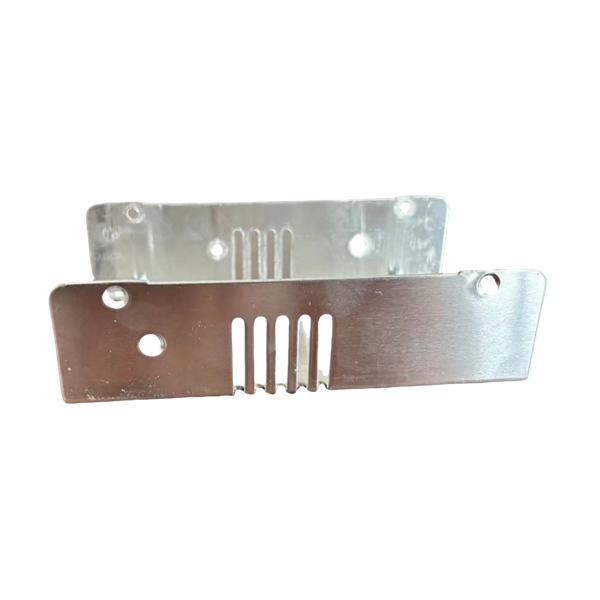
HSLA and Advanced High-Strength Steel Stamping Parts
High-strength low-alloy (HSLA) steels—commonly specified as ASTM A656 and A514 grades—are the dominant material for structural industrial stamping parts in heavy equipment frames, boom assemblies, and undercarriage components. HSLA industrial stamping parts achieve yield strengths of 50,000 to 100,000 PSI with good weldability and formability, enabling lighter-weight structures without sacrificing load-carrying capacity. Advanced high-strength steel (AHSS) grades—dual-phase (DP) and transformation-induced plasticity (TRIP) steels—are increasingly specified for industrial stamping parts where crash energy absorption and weight reduction are simultaneously required, such as operator cab structures and engine hood panels.
Wear-Resistant and Abrasion-Resistant Stamping Alloys
High-abrasion areas in heavy equipment—loader bucket surfaces, excavator tooth adapters, conveyor system components—require industrial stamping parts made from abrasion-resistant alloy plate materials. Hardox 400 to Hardox 600 series wear plates are formed and stamped into industrial stamping parts for these demanding applications, with Brinell hardness ranging from 370 to 600 HB. Forming these materials requires specialized progressive die tooling with reinforced cam actions, high-capacity presses, and multi-stage forming sequences that account for the significantly higher yield strength and springback behavior of wear-resistant alloys compared to conventional carbon steel industrial stamping parts.
Stamping Process Options for Industrial Parts
Heavy equipment manufacturing employs multiple stamping process configurations for industrial stamping parts, each suited to different production volumes, geometry complexity, and dimensional accuracy requirements.
Progressive Die Stamping for Complex Industrial Parts
Progressive die stamping is the highest-volume production method for industrial stamping parts where the part geometry requires multiple forming operations. In progressive die stamping, a continuous strip of material advances through a multi-station die with each station performing a distinct forming operation—blank, draw, flange, pierce, cam, form—before the finished part exits the final station and is stripped from the carrier. Progressive die stamping for industrial stamping parts achieves production rates of 30 to 200 strokes per minute depending on part size and complexity, making it the most economical choice for industrial stamping parts with annual volumes exceeding 50,000 pieces.
Transfer Die Stamping for Large-Format Industrial Parts
For industrial stamping parts too large for progressive die feeding systems—panels exceeding 24 inches in any dimension—transfer die stamping is the preferred method. In transfer die stamping, a blank is fed into the first press station, then mechanically transferred between stations by a transfer fingers system that moves the part through the progressive forming sequence. Heavy equipment structural panels, cab roof components, and hood assemblies are routinely produced by transfer die industrial stamping parts on presses ranging from 500 to 3,000 tons.
Single-Hit Versus Multi-Hit Stamping for Industrial Parts
For lower-volume industrial stamping parts—typically below 10,000 pieces annually—and complex formed geometries that exceed the capability of conventional progressive dies, single-hit or multi-hit stamping on gap-frame or C-frame presses provides the required flexibility. Single-hit industrial stamping parts production requires multiple setups and reblanking operations between forming stages, increasing per-part cost but eliminating the significant tooling investment required for progressive dies. The tooling cost for a single-hit forming die for industrial stamping parts typically ranges from $5,000 to $50,000, compared to $50,000 to $500,000 for a progressive die set—a critical economic threshold that determines whether multi-hit or progressive die stamping is the appropriate method.
Dimensional Tolerances for Industrial Stamping Parts
Dimensional tolerances on industrial stamping parts for heavy equipment vary by application criticality. Structural attachment brackets and mounting plates require positional tolerances of ±0.030 to ±0.060 inches on hole locations, achievable with standard blanking and piercing dies. Precision industrial stamping parts for hydraulic manifold mounting or electronic enclosure assembly require tolerances of ±0.005 to ±0.015 inches, requiring precision-ground die components, spring-loaded strippers, and press ram accuracy controls unavailable on general-purpose stamping equipment.
Flatness and Surface Quality Requirements
Flatness requirements for industrial stamping parts in heavy equipment depend on whether the part serves a structural or sealing function. Structural industrial stamping parts require flatness of 0.060 to 0.125 inches per foot—achievable with standard stamping equipment and stress-relief leveling as needed. Sealing-surface industrial stamping parts—such as oil pan covers and hydraulic tank lids—require flatness below 0.015 inches per foot, achievable with precision-stamped and roller-leveled material that eliminates the residual camber and distortion inherent in stamped plate.
Tooling Considerations for Heavy Equipment Stamping Parts
The tooling strategy for industrial stamping parts in heavy equipment manufacturing represents the largest upfront capital investment, and tooling design decisions made during the prototype phase constrain production economics for the part's entire life cycle. Material selection for stamping dies—tool steel (D2, A2, S7 grades), carbide inserts for piercing stations, and powder metal compounds for high-wear forming surfaces—must be matched to the material grade and thickness of the industrial stamping parts being produced.
Die Maintenance and Production Life
Well-maintained progressive die tooling for industrial stamping parts production achieves 1,000,000 to 5,000,000 strokes before major tool refurbishment, with intermediate punch and die replacements at 250,000 to 500,000 stroke intervals. Press tonnage monitoring systems that detect increasing blanking forces as die components wear—indicating punch and die clearance has increased beyond acceptable limits—enable preventive maintenance scheduling that avoids the dimensional non-conformances produced by worn die tooling. Buyers specifying industrial stamping parts should request the supplier's die maintenance log, press tonnage monitoring records, and production part approval process (PPAP) data to verify that the tooling is being maintained within dimensional specification throughout the production run.
Conclusion
Industrial stamping parts for heavy equipment manufacturing demand a manufacturing approach that balances structural performance requirements, production volume economics, and tooling investment strategy. HSLA and AHSS materials dominate industrial stamping parts specification for structural applications, while wear-resistant alloys serve the abrasion-critical zones. Progressive die stamping delivers the highest economy for high-volume industrial stamping parts, with transfer die and multi-hit stamping methods reserved for large-format and lower-volume applications. Heavy equipment buyers who qualify industrial stamping parts suppliers on tooling maintenance practices, material certification, and dimensional capability—not solely on unit price—consistently achieve lower total cost through improved first-pass yields and reduced field quality incidents.
Frequently Asked Questions
What is the minimum thickness range for industrial stamping parts in heavy equipment?
Industrial stamping parts for heavy equipment typically range from 0.048 inches (1.2 mm) to 0.500 inches (12.7 mm), with structural components most commonly specified between 0.075 and 0.250 inches.
How do I determine whether progressive die or single-hit stamping is appropriate for my industrial parts?
Annual volumes above 50,000 pieces and geometries requiring more than three forming operations favor progressive die industrial stamping parts despite higher tooling investment. Lower volumes and complex geometries favor single-hit or multi-hit stamping.
What surface treatments are available for industrial stamping parts?
Industrial stamping parts are available with hot-dip galvanizing, zinc electroplating, powder coating, phosphate coating, and weathering steel finishes depending on the corrosion environment and cosmetic requirements of the heavy equipment application.
Can industrial stamping parts suppliers handle material sourcing for heavy equipment components?
Most industrial stamping parts suppliers source raw material—steel coil, plate, and bar—from established steel service centers and distributors, with material costs passed through at quoted prices. Material substitution requires buyer approval and engineering review.
References
1. ASM Handbook Volume 14B: "Sheet Metal Forming," ASM International, Materials Park, 2005.
2. Lange, K., "Handbook of Metal Forming," 2nd Edition, McGraw-Hill, New York, 1985.
3. ASTM A514/A514M-18, "Standard Specification for High-Yield-Strength, Quenched and Tempered Alloy Steel Plate," ASTM International, West Conshohocken, 2018.
4. Automotive Industry Action Group (AIAG), "Production Part Approval Process (PPAP)," 4th Edition, AIAG, Southfield, 2006.
5. Hosford, W.F. and Caddell, R.M., "Metal Forming: Mechanics and Metallurgy," 4th Edition, Cambridge University Press, Cambridge, 2011.