

Heavy machinery operates in punishing conditions that separate genuine industrial sheet metal fabrication from routine fabrication work. The components that make up excavators, bulldozers, agricultural harvesters, and construction equipment face high cyclic loads, vibration, impact, and constant exposure to dirt, moisture, and temperature extremes. Industrial sheet metal fabrication for this category must account for these conditions from the initial material selection through final inspection. This guide draws on what experienced industrial sheet metal fabrication shops know about sourcing, forming, and qualifying parts for heavy machinery applications—information that helps procurement engineers and design teams make better sourcing decisions.
Material Selection for Industrial Sheet Metal Fabrication in Heavy Machinery
The material for industrial sheet metal fabrication in heavy machinery is not chosen for aesthetics or corrosion resistance—it is chosen for the combination of strength, toughness, and formability that keeps the machine running under load. The most common carbon steel grades for industrial sheet metal fabrication in heavy equipment are A36 hot-rolled carbon structural plate and ASTM A572 Grade 50 high-strength low-alloy plate. A36 provides good forming capability for brackets, covers, and structural supports that don't require the yield strength of Grade 50. Grade 50—with minimum yield strength of 50 ksi compared to 36 ksi for A36—enables lighter section thicknesses on structural members fabricated by industrial sheet metal fabrication, reducing the weight penalty of thicker A36 equivalents.
Wear-Resistant Plate for Industrial Sheet Metal Fabrication Components
For industrial sheet metal fabrication components subject to abrasion—hopper walls, bucket liners, chute surfaces, scraper blades—wear-resistant plate grades like AR400 and AR500 (nominal hardness 400 and 500 Brinell respectively) are the standard material choice. These industrial sheet metal fabrication grades are significantly harder to form than structural carbon steel, requiring slower bending speeds, larger bend radii, and more frequent tool replacement. Shops performing industrial sheet metal fabrication on AR plate must have tooling rated for high-hardness material—not standard structural fabrication tooling—and will quote accordingly. The premium for using AR plate in industrial sheet metal fabrication parts is justified by the 3 to 8 times longer service life compared to structural carbon steel in high-abrasion applications.
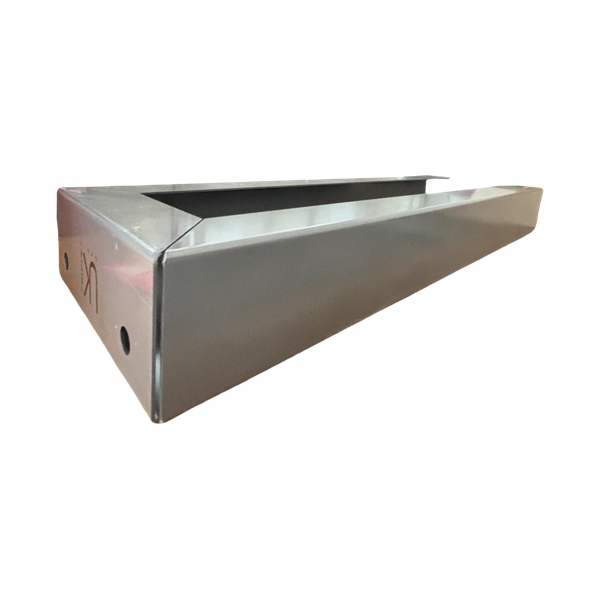
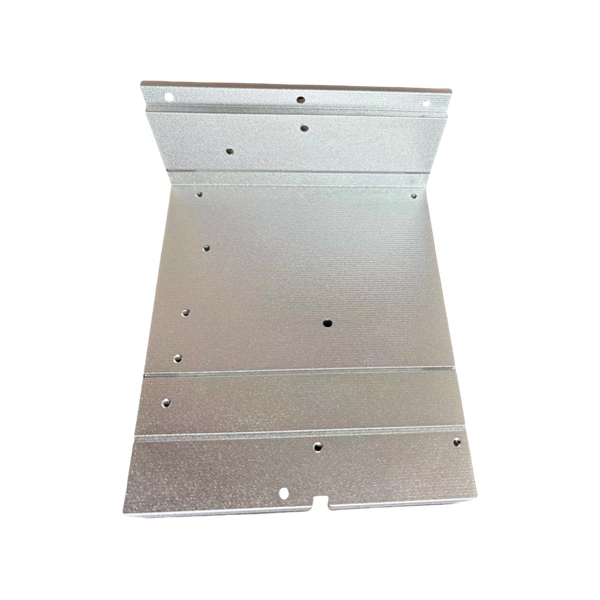
Forming and Bending Processes in Industrial Sheet Metal Fabrication
The forming operations in industrial sheet metal fabrication for heavy machinery cover the same basic methods as general fabrication—laser cutting, CNC bending, welding, and finishing—but with thicker gauges and higher-strength materials that push the limits of standard equipment. Where general industrial sheet metal fabrication might use 0.060 to 0.125 inch plate, heavy machinery fabrication commonly runs 0.187 to 0.500 inch plate, and structural members may go up to 0.750 inch or beyond. Bending this material requires presses with tonnage capacity that general fabrication shops don't have, and operators with experience managing springback and Die closure forces at those thickness ranges.
CNC Bending Limits for Industrial Sheet Metal Fabrication
CNC press brake bending in industrial sheet metal fabrication is limited by the relationship between material thickness, die width, and required tonnage. The bending force per foot for air bending is approximately calculated as (0.67 x material thickness squared x tensile strength) divided by die width. For 0.250-inch A36 plate with a 1-inch V-die, the required bending force is roughly 28 tons per foot. A 10-foot industrial sheet metal fabrication part with multiple bends in 0.250-inch plate might require a press brake with 300+ tons capacity. Shops with 50 to 100-ton press brakes cannot handle this industrial sheet metal fabrication work regardless of bed length—and using a small press to attempt a thick-plate bend produces sheet camber, angular inaccuracy, and safety risk.
Welding Standards for Industrial Sheet Metal Fabrication
Welded joints in heavy machinery fabricated components are load-bearing, and the welding on industrial sheet metal fabrication parts must meet structural weld standards. AWS D1.1 Structural Welding Code—Steel governs the welding procedure specifications, welder qualification, and inspection requirements for carbon steel industrial sheet metal fabrication. All structural welds require documented WPS parameters (heat input, preheat temperature, interpass temperature), welder performance qualifications, and visual inspection per AWS D1.1 criteria. For critical fatigue-loaded joints in industrial sheet metal fabrication—such as boom welds on excavators or hitch welds on agricultural equipment—MT or UT weld inspection may be required per the engineering specification.
Preheat Requirements in Industrial Sheet Metal Fabrication
Preheat—raising the base metal temperature before welding—controls the cooling rate of the weld zone and prevents cracking in higher-strength and thicker-section industrial sheet metal fabrication welds. AWS D1.1 specifies minimum preheat temperatures based on material thickness and carbon equivalent value (CE). For A36 plate over 0.750 inch thick, the minimum preheat is 150°F. For A572 Grade 50 with CE above 0.40, the preheat may need to be 225°F or higher. A reputable industrial sheet metal fabrication supplier measures base metal temperature with a contact thermometer before welding and records it as part of the welding procedure qualification record. Skipping preheat on thick-section industrial sheet metal fabrication welds is one of the most common causes of hydrogen cracking in the field.
Quality Inspection for Industrial Sheet Metal Fabrication
Inspection of industrial sheet metal fabrication parts for heavy machinery follows the dimensional and visual standards specified on the engineering drawing. Dimensional inspection on fabricated industrial sheet metal fabrication parts is more complex than on machined parts because many dimensions are measured in 3D space on assembled or semi-assembled substructures, not on individual flat features. A professional industrial sheet metal fabrication shop uses combination squares, tape measures, and levels for rough dimensioning, supplemented by theodolites or laser trackers for critical structural alignment checks on large industrial sheet metal fabrication assemblies where the cumulative tolerance stack from part to part must be managed.
Dimensional Tolerances in Industrial Sheet Metal Fabrication
General industrial sheet metal fabrication tolerances for non-critical structural components are ±0.060 to ±0.125 inches per foot for linear dimensions and ±1 to ±2 degrees for angular dimensions. Critical interface dimensions on industrial sheet metal fabrication parts—the bolt hole patterns that must align with mating components—should be held to ±0.010 to ±0.030 inches, which requires the industrial sheet metal fabrication supplier to use templated fixture tooling or CNC cutting to achieve the tight relative positioning of those features.
Supplier Qualification for Industrial Sheet Metal Fabrication
Qualifying an industrial sheet metal fabrication supplier for heavy machinery applications requires more than a price quote and a facility tour. The buyer should verify the supplier's welding certification scope under AWS D1.1, confirm that their press brake fleet has adequate tonnage capacity for the material thickness specified, and review the supplier's quality manual for their non-conformance and corrective action process. A industrial sheet metal fabrication supplier with ISO 9001 certification has the basic quality system infrastructure in place. For industrial sheet metal fabrication going into ASME or API-code pressure vessels or structural systems, additional third-party inspections and code compliance documentation are mandatory.
Conclusion
Industrial sheet metal fabrication for heavy machinery demands higher-strength materials, heavier equipment, structural welding discipline, and dimensional control standards that go beyond general fabrication capability. The material grades—A36, A572 Grade 50, AR400/AR500—each serve specific performance requirements that the industrial sheet metal fabrication buyer must match to the application. The forming equipment must have adequate tonnage for the material thickness being bent. The welding must comply with AWS D1.1 or the applicable structural code. And the inspection process must verify that dimensions are correct not just on individual parts but in the assembled substructure context. Buyers who qualify industrial sheet metal fabrication suppliers against these coordinated criteria get components that survive the machine's service life rather than failing prematurely.
Frequently Asked Questions
What material grades are used in industrial sheet metal fabrication for heavy machinery?
The most common grades for industrial sheet metal fabrication are A36 and A572 Grade 50 structural carbon steel for general components, and AR400 or AR500 wear-resistant plate for abrasion-critical areas like hopper walls and bucket liners.
How thick can industrial sheet metal fabrication shops bend on CNC press brakes?
The maximum bend thickness in industrial sheet metal fabrication is limited by press brake tonnage. A 300-ton press brake can air bend approximately 0.500 inch carbon steel in a 1-inch V-die; thicker sections require higher tonnage or multi-pass bending strategies.
What welding code governs industrial sheet metal fabrication for structural applications?
AWS D1.1 Structural Welding Code—Steel is the governing standard for most industrial sheet metal fabrication welds on heavy machinery structural components, requiring documented WPS, welder qualification, and visual inspection.
What dimensional tolerances can industrial sheet metal fabrication achieve?
General industrial sheet metal fabrication achieves ±0.060 to ±0.125 inches per foot on linear dimensions. Critical interface features like bolt hole patterns are held to ±0.010 to ±0.030 inches using templated or CNC-controlled cutting.
References
1. AWS D1.1/D1.1M:2020, "Structural Welding Code—Steel," American Welding Society, Miami, 2020.
2. ASTM A36/A36M-19, "Standard Specification for Carbon Structural Steel," ASTM International, West Conshohocken, 2019.
3. ASTM A572/A572M-18, "Standard Specification for High-Strength Columbium-Vanadium Structural Steel," ASTM International, West Conshohocken, 2018.
4. Montgomery, D.C., "Introduction to Statistical Quality Control," 7th Edition, Wiley, Hoboken, 2012.
5. ASM Handbook Volume 6: "Welding, Brazing, and Soldering," ASM International, Materials Park, 1993.