

Selecting the right sheet metal stamping manufacturer is one of the most consequential sourcing decisions an engineering or procurement team makes. The sheet metal stamping manufacturer you choose determines not only the dimensional quality and cost of your stamped components, but also the responsiveness of your supply chain, the risk exposure of your production schedule, and the long-term viability of your product cost structure. Yet most B2B buyers evaluate sheet metal stamping manufacturer candidates primarily on quoted price—a metric that correlates poorly with actual supply chain performance and component quality over time. This guide provides a systematic framework for qualifying and selecting a sheet metal stamping manufacturer based on the engineering, quality, and commercial criteria that actually predict sourcing success.
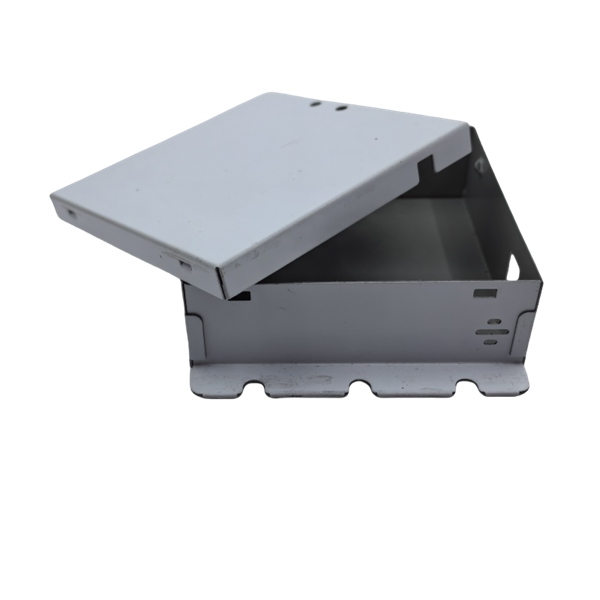
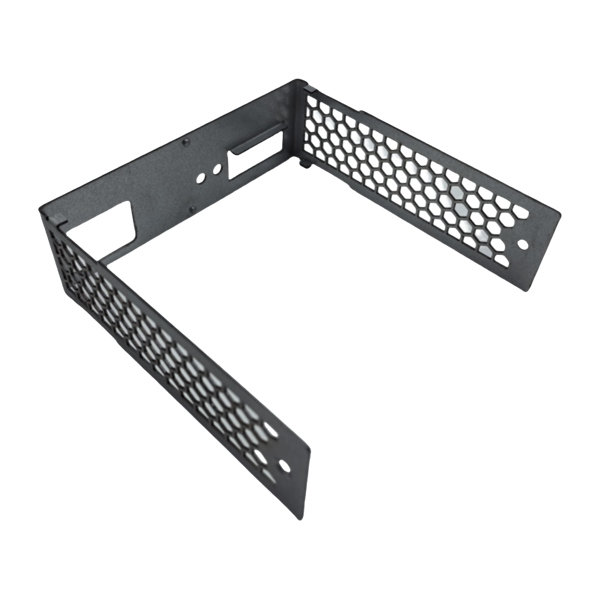
Equipment Fleet: The Foundation of Sheet Metal Stamping Manufacturer Capability
The equipment fleet of a sheet metal stamping manufacturer defines the upper boundary of what they can produce. Before evaluating any other qualification criterion, assess whether the sheet metal stamping manufacturer's equipment can physically produce your components. Key parameters include press capacity, bed size, automation capability, and machine age.
Press Capacity and Bed Size Requirements
The tonnage rating of a sheet metal stamping manufacturer's presses determines the maximum material thickness and part geometry complexity they can stamp. Calculate the blanking force for your component using the formula: Force (tons) = Material Thickness (inches) × Perimeter (inches) × Shear Strength (PSI) ÷ 2,000. Add a 30 percent safety margin for draw and forming operations. If your component requires 400 tons of blanking force and the sheet metal stamping manufacturer's largest press is 300 tons, they cannot produce your part regardless of their quality reputation. Similarly, the press bed size and bolster dimensions must accommodate your part's maximum envelope plus a minimum 2-inch margin on all sides for strip guiding and clamping. Verify that the sheet metal stamping manufacturer's press bed dimensions are at least 4 inches larger than your part's maximum dimension in each axis.
Automation and Production Volume Capability
Modern sheet metal stamping manufacturer operations rely on servo-feed press automation, coil-handling equipment, and part ejection systems to achieve high production rates with consistent quality. Verify that the sheet metal stamping manufacturer has servo-feed reels capable of handling your coil weight and width requirements, part conveyor and stacking systems that prevent part damage during ejection, and in-die or post-die quality verification systems such as vision inspection cameras or CMM integration for 100 percent or statistical part inspection. A sheet metal stamping manufacturer with high manual content in their production process produces higher labor cost per part and greater quality variation than one with fully automated press cells—differences that compound significantly at high production volumes.
Quality Management System: Certification and Process Control
The quality management system of a sheet metal stamping manufacturer predicts their ability to produce conforming parts consistently, contain dimensional variation, and manage non-conforming material without shipping defective parts. ISO 9001:2015 certification is the minimum quality baseline for any sheet metal stamping manufacturer, demonstrating that they have documented quality processes, management review procedures, and corrective action protocols. For automotive applications, verify IATF 16949:2016 certification; for medical applications, ISO 13485:2016; for aerospace applications, AS9100D.
Process Capability and SPC Implementation
A reliable sheet metal stamping manufacturer maintains statistical process control (SPC) on all critical characteristics of production runs, tracking Cpk values that quantify the process capability of their stamping operations. Request Cpk data from the sheet metal stamping manufacturer on the three most critical dimensions of your proposed component—parts with Cpk values above 1.33 indicate a process that maintains dimensional control with minimal inspection, while Cpk below 1.0 indicates a process that requires 100 percent inspection to catch non-conforming parts. The sheet metal stamping manufacturer's willingness to share SPC data during the qualification process is itself a positive indicator: suppliers who invest in SPC typically have the statistical sophistication to understand and improve their processes, while those who resist sharing data may be hiding capability deficiencies.
First Article Inspection and PPAP Documentation
Every sheet metal stamping manufacturer engagement should begin with a first article inspection (FAI) that verifies the initial production run conforms to the engineering drawing specification. For automotive applications, the sheet metal stamping manufacturer must produce PPAP (Production Part Approval Process) documentation per AIAG guidelines: dimensional report, material test results, process flow diagram, PFMEA (Process Failure Mode and Effects Analysis), process capability studies, and appearance approval. A sheet metal stamping manufacturer who cannot produce a complete PPAP Level 3 package on request is demonstrating a quality management gap that disqualifies them from automotive and other regulated supply chains regardless of their quoted price.
Material Sourcing and Supply Chain Integration
The material supply chain of a sheet metal stamping manufacturer affects delivery reliability, cost stability, and quality consistency. Evaluate whether the sheet metal stamping manufacturer sources material directly from primary mills or through distribution channels, and how material price volatility is managed in their quotation structure.
Mill-Sourced Versus Distributor-Sourced Material
A sheet metal stamping manufacturer with mill-direct purchasing agreements can source material at lower cost and with tighter chemistry and mechanical property control than one purchasing through distribution channels. Mill-sourced coil and sheet for sheet metal stamping parts carries material test reports traceable to the specific heat number of the steel or aluminum from which it was produced. Distributor-sourced material may have passed through multiple supply chain intermediaries, reducing traceability and potentially introducing material substitution risk. For aerospace, medical, and automotive applications where material certification is a regulatory requirement, the sheet metal stamping manufacturer's material sourcing practice is a non-negotiable qualification criterion.
Coil Stock Continuity and Production Scheduling
The sheet metal stamping manufacturer's ability to maintain coil stock continuity for long production runs directly affects part-to-part consistency. Verify whether the sheet metal stamping manufacturer schedules production to complete all parts from a single coil lot before transitioning to a new heat number, or whether they splice coils mid-run to minimize setup downtime. Coil splices in mid-run production introduce dimensional variation at the splice point due to thickness and surface finish differences between the end of one coil and the beginning of the next, degrading Cpk values and increasing the risk of non-conformance in parts produced at the splice transition. A well-managed sheet metal stamping manufacturer sequences production to complete full coil lots before splice transitions or maintains documented process parameters for splice transitions that are verified by additional inspection at the splice zone.
Secondary Operations and Value-Added Services
Most stamped components require secondary operations before they are ready for assembly. The breadth of in-house secondary operation capability at a sheet metal stamping manufacturer reduces the number of tier-2 suppliers in your supply chain, simplifies quality accountability, and compresses total lead time.
Welding, Fastening, and Assembly Integration
A full-service sheet metal stamping manufacturer with in-house resistance welding (spot welding, projection welding, seam welding), mechanical fastening (riveting, PEM insert installation), and automated assembly capabilities can deliver finished sub-assemblies rather than loose stamped blanks. Evaluate whether the sheet metal stamping manufacturer holds the applicable welding procedure specifications (WPS) and welder performance qualifications (WPQ) per AWS D1.1 or customer-specific requirements. Verify that the sheet metal stamping manufacturer's welding quality system includes weld inspection protocols, weld sample retention, and non-destructive examination capability for the specific weld type and application. For sheet metal stamping parts requiring hardware insertion—PEM nuts, standoffs, fasteners—the sheet metal stamping manufacturer should have documented process parameters for insertion force, annular ring thickness verification, and torque-to-failure testing on representative samples.
Surface Finishing and Quality Documentation
Sheet metal stamping parts requiring post-stamp surface treatment—powder coating, wet painting, anodizing, zinc plating, e-coating—must either be performed by the sheet metal stamping manufacturer in-house or sourced from approved sub-tier finishers with documented quality systems. When the sheet metal stamping manufacturer sub-contracts finishing, verify that they have a documented incoming inspection process for finished parts, a defined incoming quality specification, and a non-conformance management process that protects against receiving non-conforming coatings. The quality risk of sub-contracted finishing is frequently higher than the stamping operation itself, because the sheet metal stamping manufacturer has less visibility into the finishing process parameters than their own stamping operations.
Conclusion
Choosing a sheet metal stamping manufacturer based on price alone invites supply chain risk that becomes apparent only after production begins. A systematic qualification approach—evaluating equipment fleet capability, quality management system maturity, process capability data, material sourcing practices, and secondary operation integration—produces a sourcing decision supported by engineering evidence rather than commercial intuition. The most reliable sheet metal stamping manufacturer relationships are built on technical qualification that precedes commercial negotiation, creating a foundation of demonstrated capability that makes price competition meaningful because both parties know exactly what is being supplied.
Frequently Asked Questions
What minimum certifications should a sheet metal stamping manufacturer hold?
ISO 9001:2015 is the minimum quality certification for any sheet metal stamping manufacturer. Automotive supply chains require IATF 16949:2016, medical requires ISO 13485:2016, and aerospace requires AS9100D.
How do I verify the actual process capability of a sheet metal stamping manufacturer?
Request Cpk studies on the three most critical dimensions of your proposed component from the sheet metal stamping manufacturer. Cpk values above 1.33 indicate a capable process. Cpk below 1.0 indicates significant dimensional variation requiring 100 percent inspection.
Should I prefer a sheet metal stamping manufacturer with in-house secondary operations?
In-house secondary operations—welding, hardware insertion, finishing—simplify supply chain management, reduce lead time, and consolidate quality accountability. For complex stamped assemblies, a sheet metal stamping manufacturer with broad secondary operation capability typically delivers lower total cost and better quality control than one who sub-contracts finishing.
How many presses should a qualified sheet metal stamping manufacturer operate?
There is no minimum fleet size, but a reliable sheet metal stamping manufacturer should have sufficient press capacity to handle your peak volume requirements with a minimum of 20 percent spare tonnage available for contingencies. Press fleet age and maintenance program are more important indicators of capability than fleet size.
References
1. ISO 9001:2015, "Quality Management Systems—Requirements," International Organization for Standardization, Geneva, 2015.
2. IATF 16949:2016, "Quality Management System Requirements for Automotive Production," International Automotive Task Force, 2016.
3. Automotive Industry Action Group (AIAG), "Production Part Approval Process (PPAP)," 4th Edition, AIAG, Southfield, 2006.
4. AWS D1.1/D1.1M:2020, "Structural Welding Code—Steel," American Welding Society, Miami, 2020.
5. Montgomery, D.C., "Introduction to Statistical Quality Control," 7th Edition, Wiley, Hoboken, 2012.